The Story
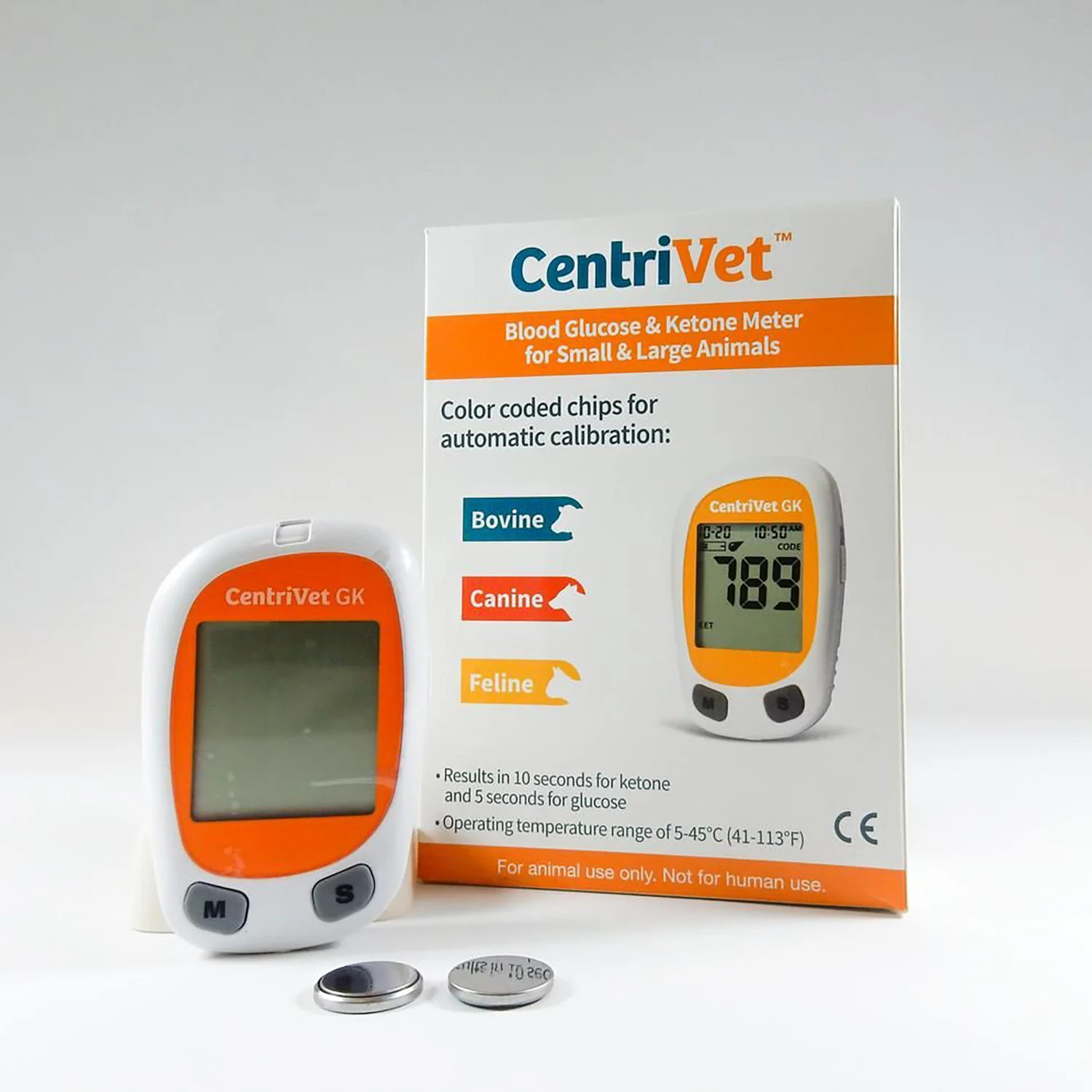
CentriVet Glucose & Ketose Tester Digital
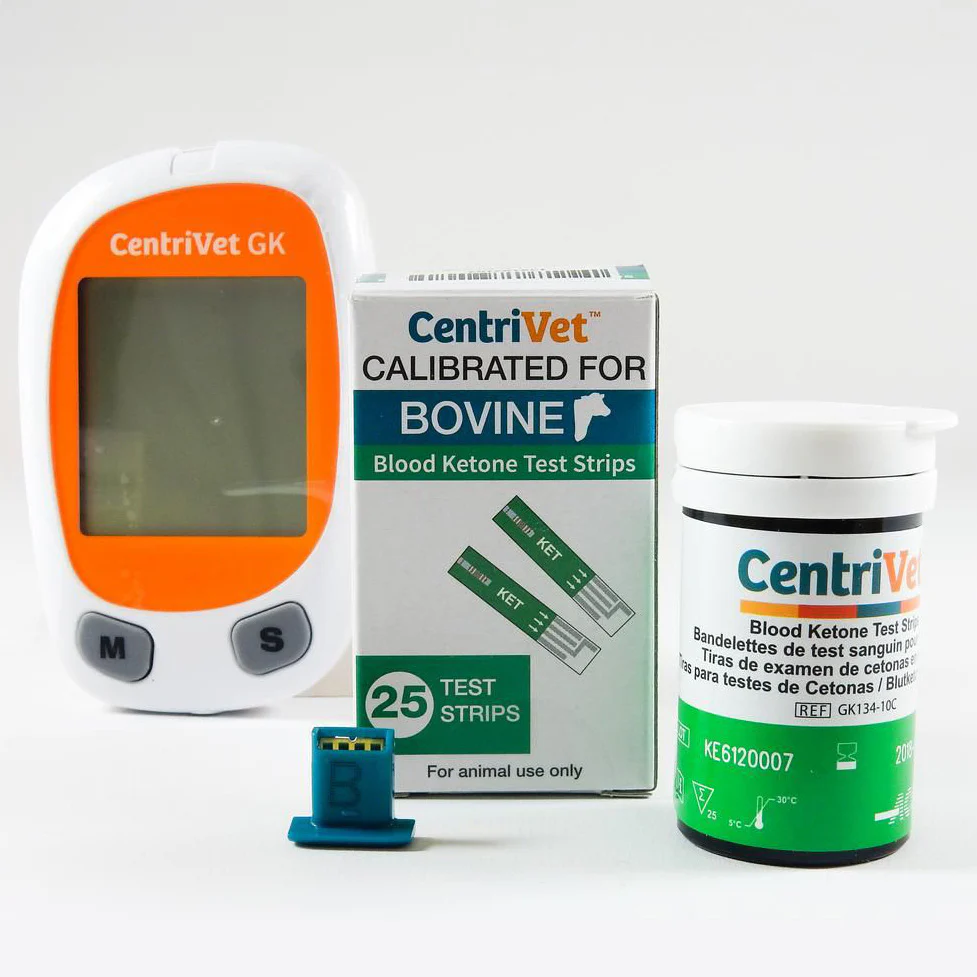
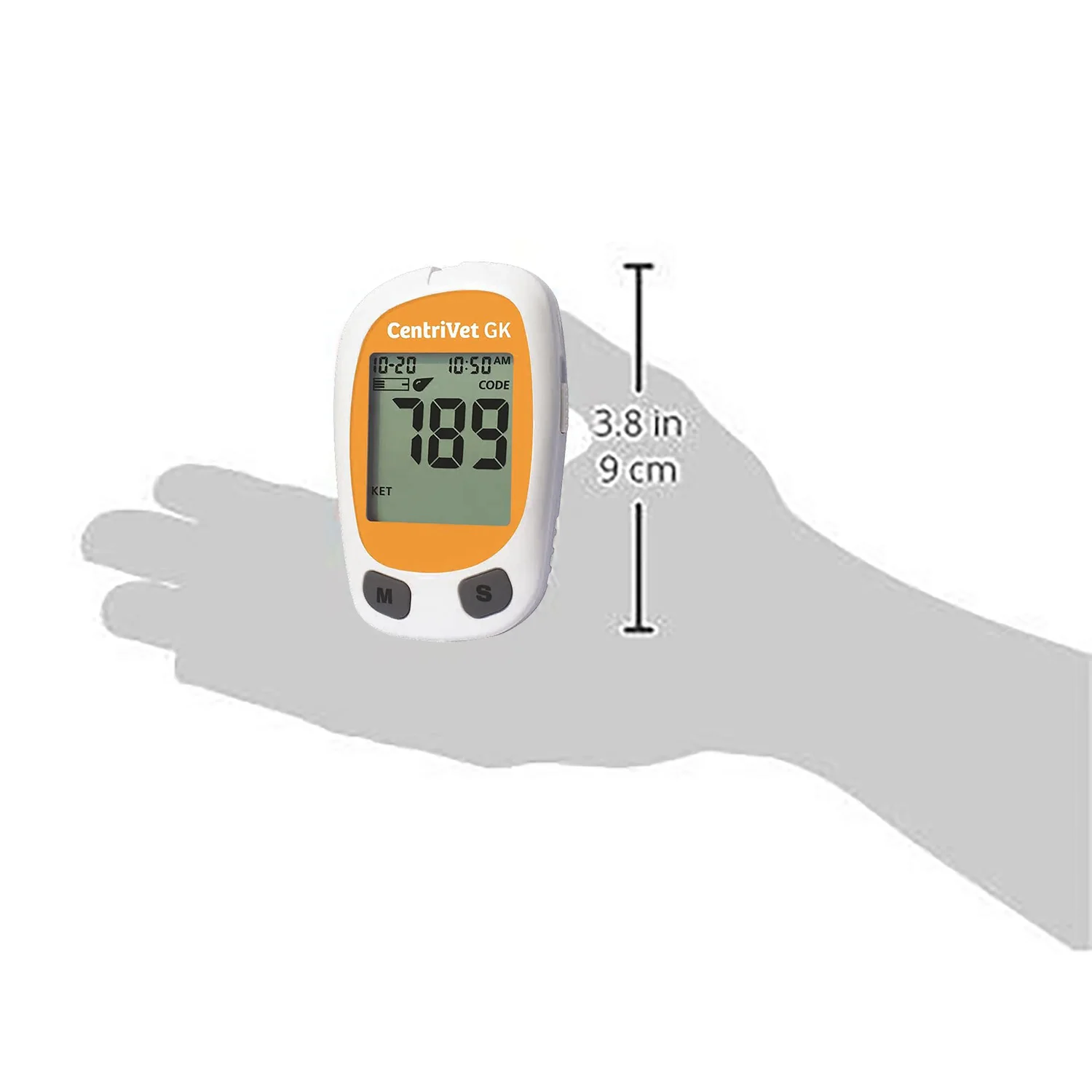
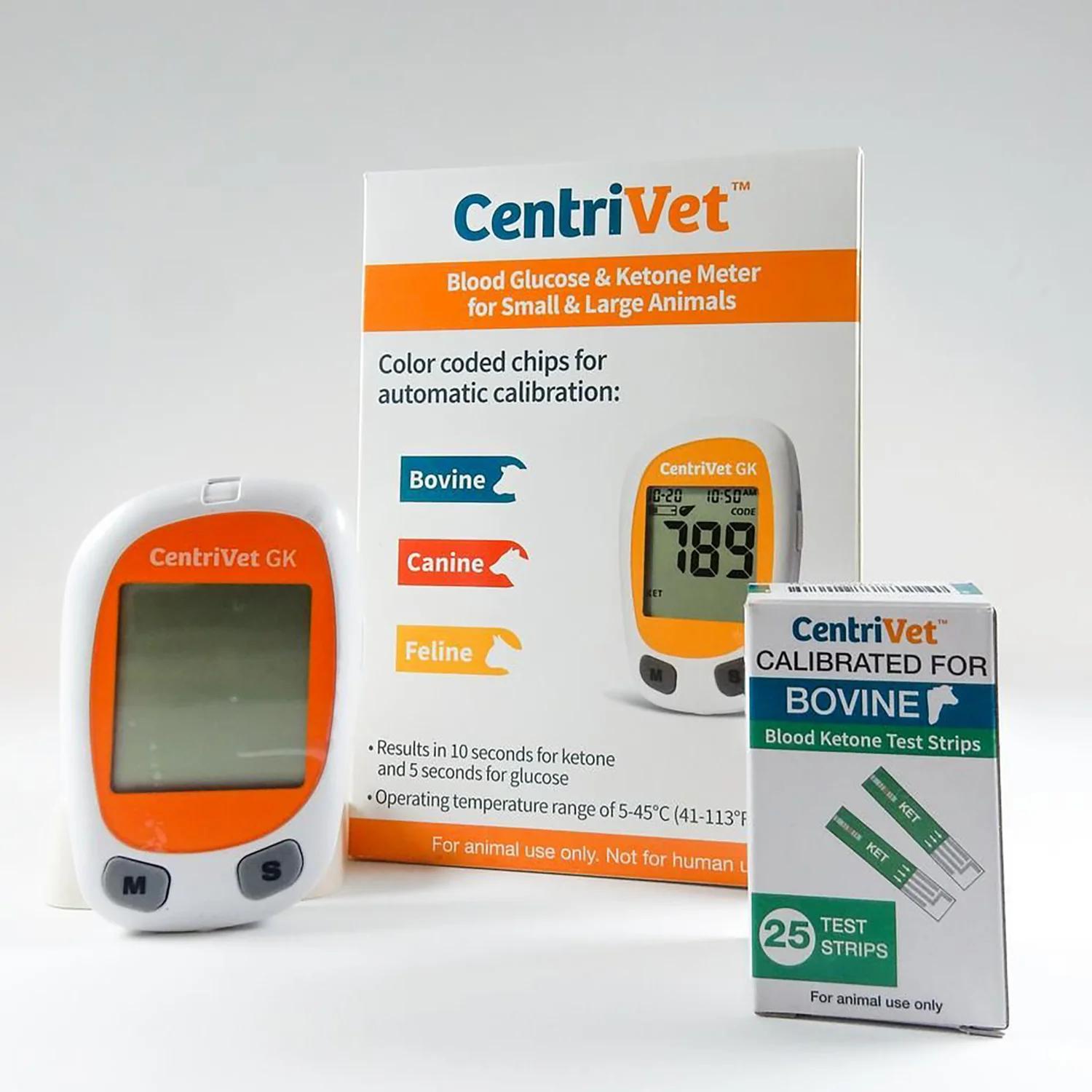
CentriVet blood glucose and ketose tester is a dual glucose and ketose meter, specially developed for animals. Unique technology ensures that you get accurate results for each animal within seconds.
- Small amount of blood needed 0.8 µL and 1.2 µL for glucose and ketones.
- 5 seconds for glucose results and 10 seconds for ketone results.
- Clinically proven accuracy
- Audible fill detection reduces lost test strips
- Set includes Monitor (tester), 2x battery, and storage pouch
Supplied without test strips 903081
Why test? Ketosis (milk fever) is a metabolic disease. One in nine Dutch dairy cows suffers from ketosis in the first months after calving, but there are large differences in the percentage of cows with ketosis per farm. The disease mainly occurs at the beginning of lactation as a result of a negative energy balance. Cause Ketosis arises because cows take in too little feed immediately after calving compared to the amount of milk produced, in other words: energy intake lags behind energy needs. To cover this deficit, the cow breaks down its own body fat, a process that forms ketones. The body can process small amounts of these waste products, but with extreme energy deficits, it can no longer do so, and ketosis develops. Symptoms Cows with ketosis become sluggish, have little appetite, take in insufficient concentrate, produce less milk, have stiff manure, and their condition deteriorates rapidly. The exhaled air of cows with ketosis smells like acetone (one of the ketones). Ketosis is often the result of another problem, such as mastitis, uterine infection, displaced abomasum, but also a hoof disorder. These conditions negatively affect feed intake, causing cows to more quickly develop a negative energy balance. source: www.veearts.nl
Interpretation of the test:
- 0 - 1.4 mmol Normal value for a fresh cow
- 1.4 - 3.0 mmol Ketosis
- 3.0 - 6.5 mmol Severe ketosis
- 6.5 mmol Very severe ketosis
- 8.0 mmol Poor prognosis
Details & Craftsmanship
Every detail has been carefully considered to bring you the perfect product.
Details & Craftsmanship
Every detail has been carefully considered to bring you the perfect product.
Details & Craftsmanship
Every detail has been carefully considered to bring you the perfect product.
Details & Craftsmanship
Every detail has been carefully considered to bring you the perfect product.
Description
CentriVet Glucose & Ketose Tester Digital
CentriVet blood glucose and ketose tester is a dual glucose and ketose meter, specially developed for animals. Unique technology ensures that you get accurate results for each animal within seconds.
- Small amount of blood needed 0.8 µL and 1.2 µL for glucose and ketones.
- 5 seconds for glucose results and 10 seconds for ketone results.
- Clinically proven accuracy
- Audible fill detection reduces lost test strips
- Set includes Monitor (tester), 2x battery, and storage pouch
Supplied without test strips 903081
Why test? Ketosis (milk fever) is a metabolic disease. One in nine Dutch dairy cows suffers from ketosis in the first months after calving, but there are large differences in the percentage of cows with ketosis per farm. The disease mainly occurs at the beginning of lactation as a result of a negative energy balance. Cause Ketosis arises because cows take in too little feed immediately after calving compared to the amount of milk produced, in other words: energy intake lags behind energy needs. To cover this deficit, the cow breaks down its own body fat, a process that forms ketones. The body can process small amounts of these waste products, but with extreme energy deficits, it can no longer do so, and ketosis develops. Symptoms Cows with ketosis become sluggish, have little appetite, take in insufficient concentrate, produce less milk, have stiff manure, and their condition deteriorates rapidly. The exhaled air of cows with ketosis smells like acetone (one of the ketones). Ketosis is often the result of another problem, such as mastitis, uterine infection, displaced abomasum, but also a hoof disorder. These conditions negatively affect feed intake, causing cows to more quickly develop a negative energy balance. source: www.veearts.nl
Interpretation of the test:
- 0 - 1.4 mmol Normal value for a fresh cow
- 1.4 - 3.0 mmol Ketosis
- 3.0 - 6.5 mmol Severe ketosis
- 6.5 mmol Very severe ketosis
- 8.0 mmol Poor prognosis